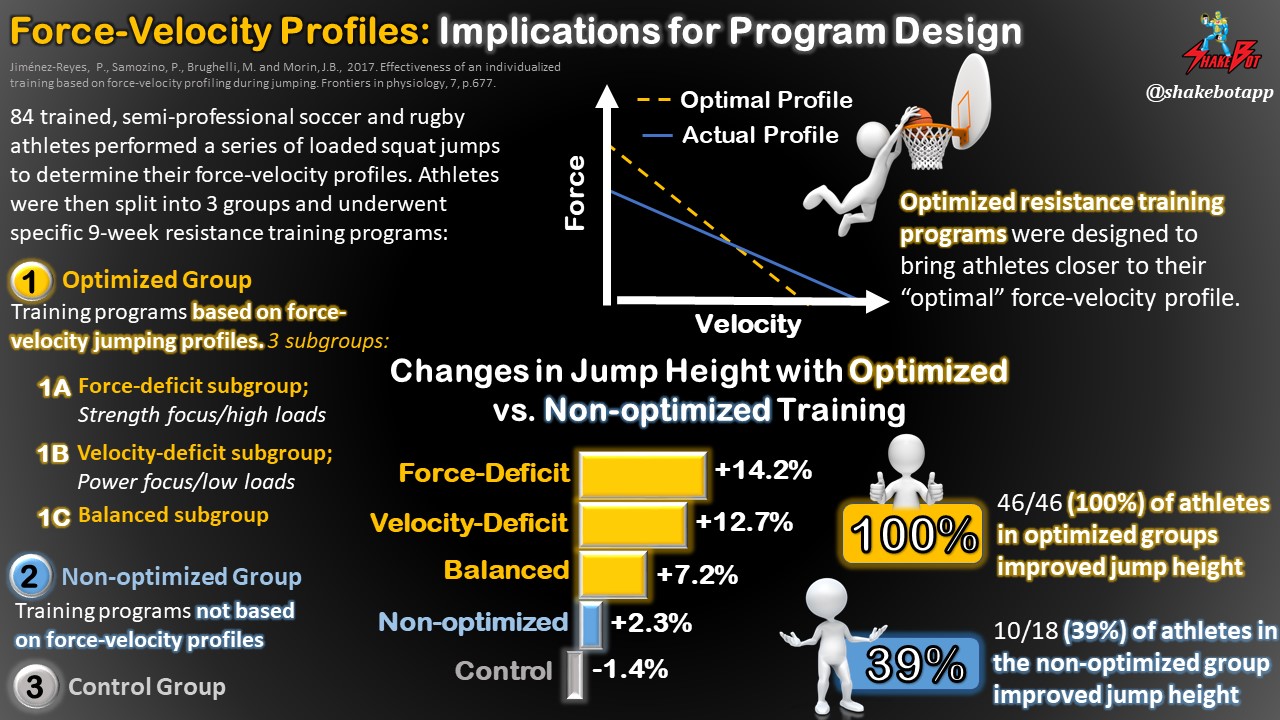
Resistance Training Program More Successful When Based on Force-Velocity Jump Profiles The reference article can be viewed here. Like the content? Be the first to spread the word! Share on X (Opens in new window) X Share on Facebook (Opens in new window) Facebook Share on LinkedIn (Opens in new window) LinkedIn Share on Reddit (Opens in new window) Reddit Share on Tumblr (Opens in new window) Tumblr More Print (Opens in new window) Print Share on Pinterest (Opens in new window) Pinterest Share on Telegram (Opens in new window) Telegram Share on WhatsApp (Opens in new window) WhatsApp Read more articles Previous Post3 Key Micronutrients for Athletes Next PostExercise Performance Adaptations to Aerobic vs. Resistance Exercise You Might Also Like What You Need to Know About Blood Flow Restriction (BFR) Training 05/10/2018 Influence of Resisted Sled-push Training on the Sprint Force-velocity Profile of Male High School Athletes 11/23/2020 Acute Effect of Repeated Sprints on Interlimb Asymmetries During Unilateral Jumping 05/25/2019
Influence of Resisted Sled-push Training on the Sprint Force-velocity Profile of Male High School Athletes 11/23/2020