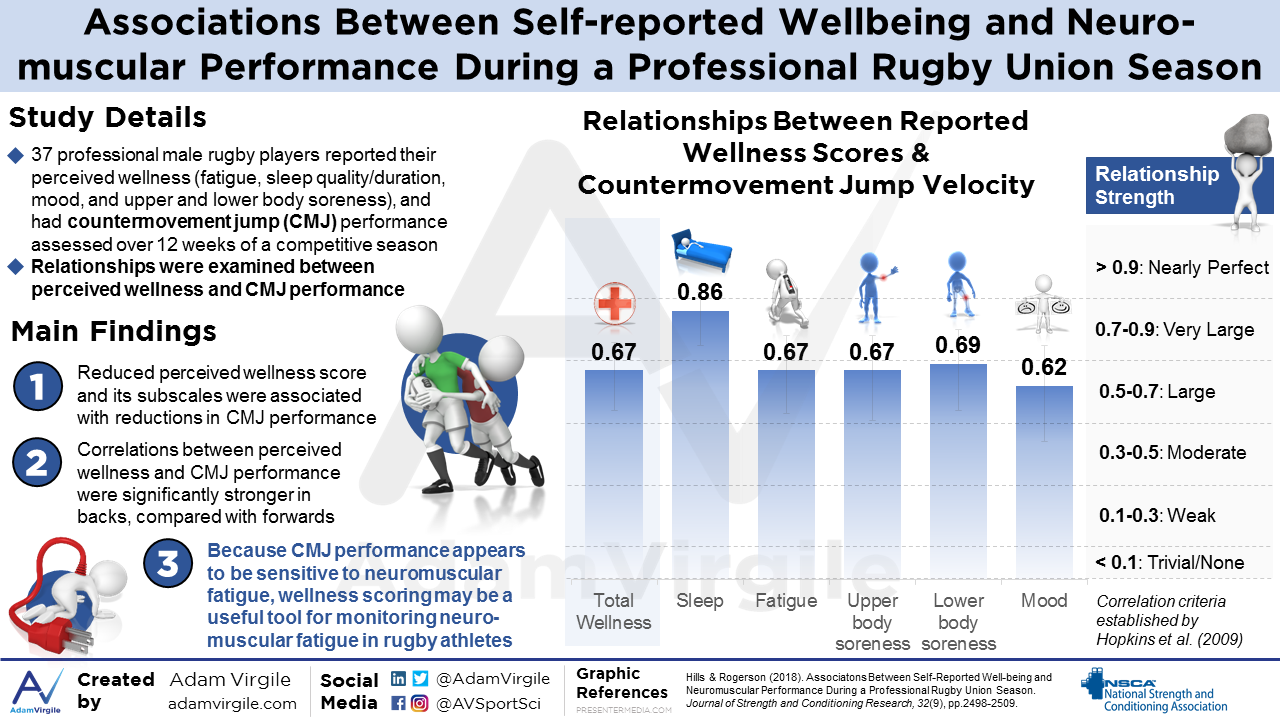
Associatons Between Self-Reported Well-being and Neuromuscular Performance During a Professional Rugby Union Season The referenced article can be viewed here. Click for Downloadable Image Like the content? Be the first to spread the word! Share on X (Opens in new window) X Share on Facebook (Opens in new window) Facebook Share on LinkedIn (Opens in new window) LinkedIn Share on Reddit (Opens in new window) Reddit Share on Tumblr (Opens in new window) Tumblr More Print (Opens in new window) Print Share on Pinterest (Opens in new window) Pinterest Share on Pocket (Opens in new window) Pocket Share on Telegram (Opens in new window) Telegram Share on WhatsApp (Opens in new window) WhatsApp Read more articles Previous PostGrowing Pains: Maturity Associated Variation in Injury Risk in Academy Football Next PostThe Translation of Sport Science Research to the Field: A Current Opinion and Overview on the Perceptions of Practitioners, Researchers and Coaches You Might Also Like Debunking 5 Myths About Training Load, Injury, and Athletic Performance 11/14/2018 Next-Day Subjective and Objective Recovery Indices Following Acute Low and High Training Loads in Academy Rugby Union Players 11/14/2019 The Reliability and Validity of Current Technologies for Measuring Barbell Velocity in the Free-weight Back Squat and Power Clean 08/17/2020
Next-Day Subjective and Objective Recovery Indices Following Acute Low and High Training Loads in Academy Rugby Union Players 11/14/2019
The Reliability and Validity of Current Technologies for Measuring Barbell Velocity in the Free-weight Back Squat and Power Clean 08/17/2020