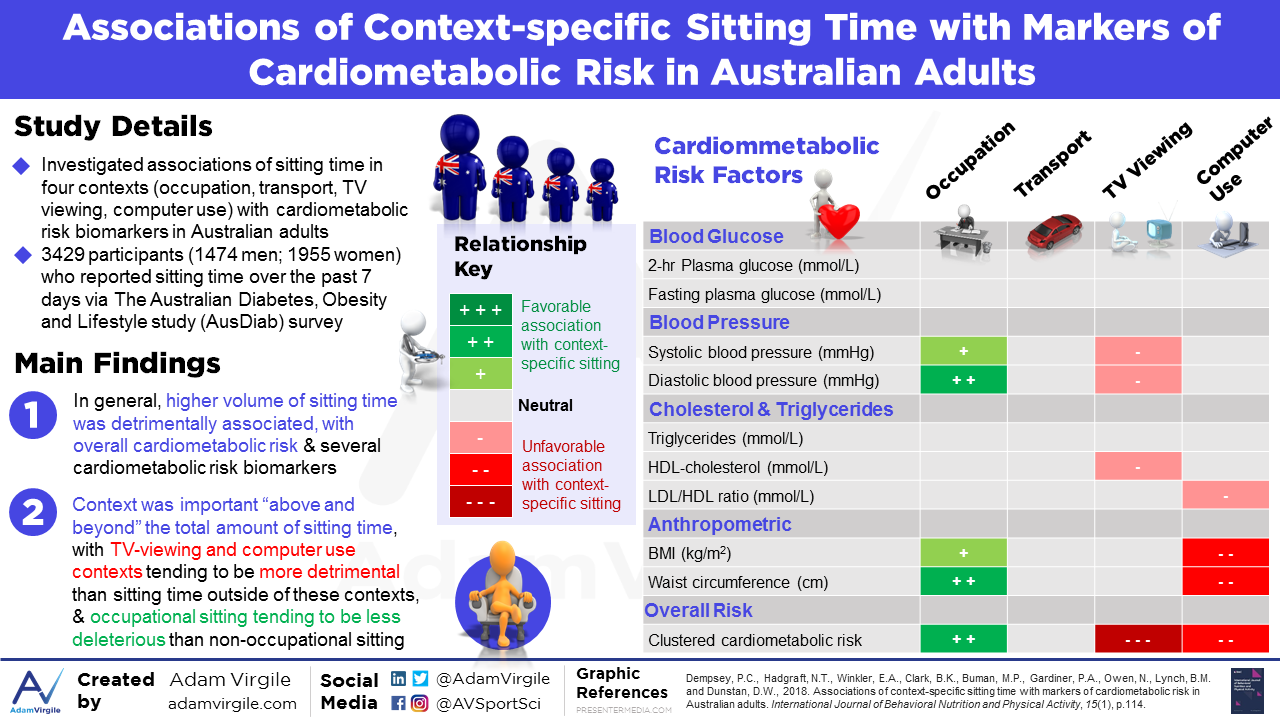
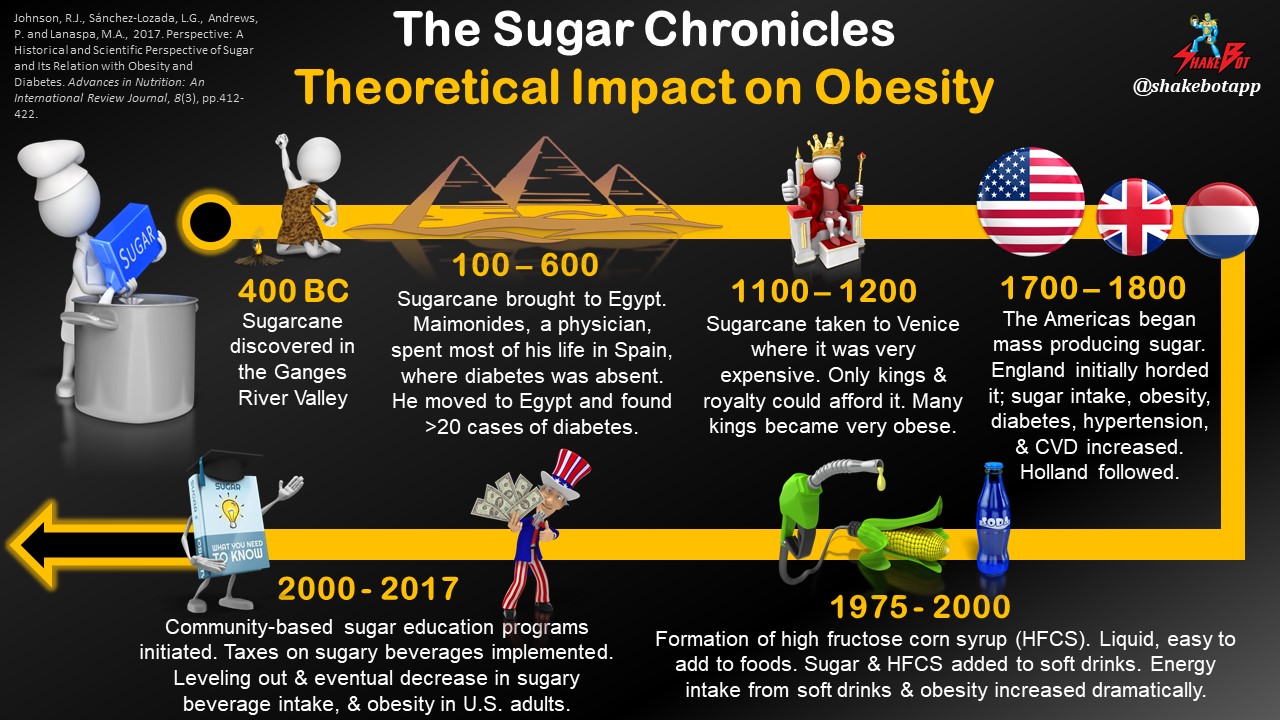
Associations of Context-specific Sitting Time with Markers of Cardiometabolic Risk in Australian Adults The referenced article can be viewed here. Click for Downloadable Image Like the content? Be the first to spread the word! Share on X (Opens in new window) X Share on Facebook (Opens in new window) Facebook Share on LinkedIn (Opens in new window) LinkedIn Share on Reddit (Opens in new window) Reddit Share on Tumblr (Opens in new window) Tumblr More Print (Opens in new window) Print Share on Pinterest (Opens in new window) Pinterest Share on Telegram (Opens in new window) Telegram Share on WhatsApp (Opens in new window) WhatsApp Read more articles Previous PostOne-repetition-maximum Measures or Maximum Bar-power Output: Which is More Related to Sport Performance? Next PostTo Couple or not to Couple? For Acute:Chronic Workload Ratios and Injury Risk, Does it Really Matter? You Might Also Like The History of Sugar and its Theoretical Impact on the Obesity Epidemic 03/15/2018 The Youth Physical Development Model: A New Approach to Long-Term Athletic Development 07/01/2019 Mechanisms of Hamstring Strain Injury: Interactions between Fatigue, Muscle Activation and Function 05/26/2020
Mechanisms of Hamstring Strain Injury: Interactions between Fatigue, Muscle Activation and Function 05/26/2020